
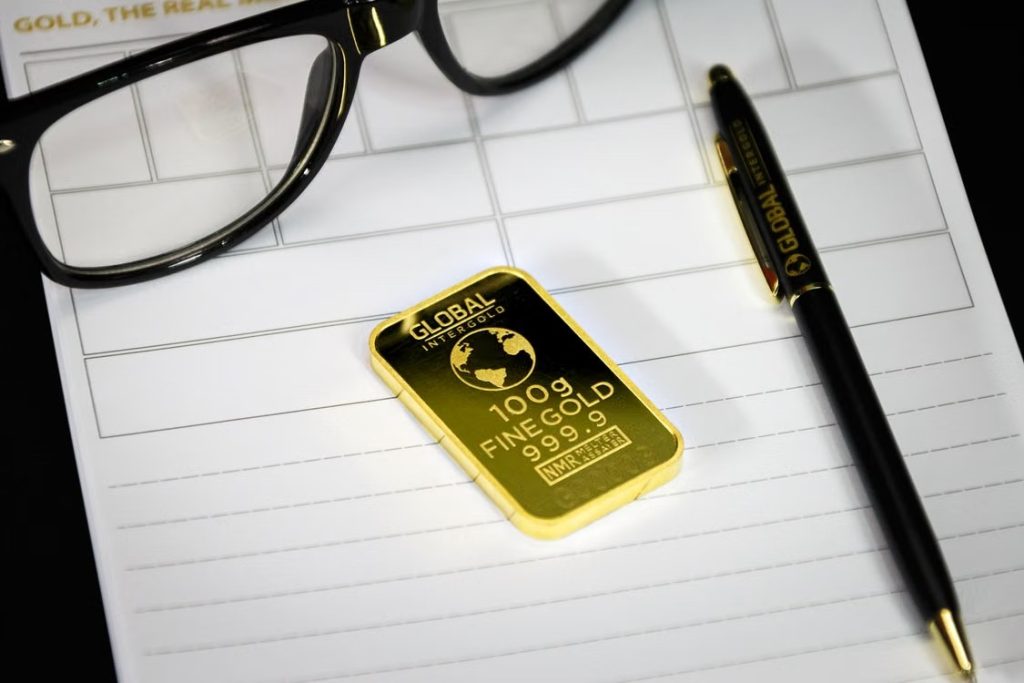
Gold is close to having one of its most volatile years in more than four decades, according to The Kobeissi Letter, a subscription-based financial newsletter and market analysis platform. After 7 daily declines of 3.5% or more in 2026, fuelled by rising Treasury yields and persistent inflation that drove bouts of selling, analysts are now questioning gold’s ‘safe haven’ status.
No year has seen sharper one-day drops since the global financial crisis. Yet, despite the recent pullback, global physical gold-backed ETFs saw a record $31 billion in inflows in Q3 2026 (World Gold Council), marking a strong multi-week accumulation trend.
Gold Close to Recording the Most Volatile Year Since 1982
With the final quarter of 2026 underway, gold could still record one of its most volatile years in decades. The World Gold Council’s July outlook reported that gold’s 30-day realised volatility exceeded 50% on an annualised basis during H1 2026, before dipping below 30% by late June. In comparison, the 20-year average is approximately 17%, highlighting the magnitude of volatility in 2026.
That follows highs in January 2026, when gold reached $5,501.70 per troy ounce on 29 January before falling to $3,978.55 on 1 July. That equates to a 27.7% drop.
Whether gold will record its most volatile year since 1982 is soon to be seen. It’s an attributed projection, not a confirmed full-year record. Changing Federal Reserve interest rate expectations, rising US Treasury yields, dollar strength, speculative positioning, and investors closing leveraged positions can influence end-of-year outcomes.
Is Gold’s ‘Safe Haven’ Reputation Diminished?
The sharp sell-offs in 2026, including a drop near $4,086 per ounce after a hotter-than-expected US inflation report and a pullback from record highs near $5,600 earlier in the year, are putting gold’s safe-haven reputation under intense scrutiny.
Gold’s performance during sudden liquidity crises shows that even traditional safe-haven assets can suffer sharp sell-offs when investors need to raise cash.
Historically, gold attracts investors during geopolitical conflict, economic uncertainty, and stock market declines. Instead, investors sold gold partly to raise cash and cover losses elsewhere, despite escalating geopolitical tensions, challenging the assumption that gold prices always rise during crises.
Interestingly, the Q3 2026 influx of gold-backed ETF inflows and the decline in futures positions suggest longer-term investment demand can remain strong even when short-term trading activity pushes prices lower.
What Could Keep Gold Prices Volatile Into 2027?
Analysts seem split on whether gold prices will remain as volatile into 2027.
Goldman Sachs research analysts state that heavy reliance on options hedging and derivatives, such as CFDs, may intensify price movements in both directions, resulting in sharp rallies and swift pullbacks. Retail traders using a CFD platform to speculate on rising or falling gold prices without owning physical bullion may see those swings continue into 2027 if gold’s volatility doesn’t settle.
J.P. Morgan Global Research has also warned that persistent inflation and further Federal Reserve rate hikes could weaken gold demand, particularly if higher yields make interest-bearing assets more attractive.
There isn’t much longer to wait to see how gold will finish 2026. Whether it’s the most volatile year since 1982 for the metal or not, it has still been incredibly turbulent, and one that investors hope will recover in 2027.